Edward Snowden Should Be Pardoned
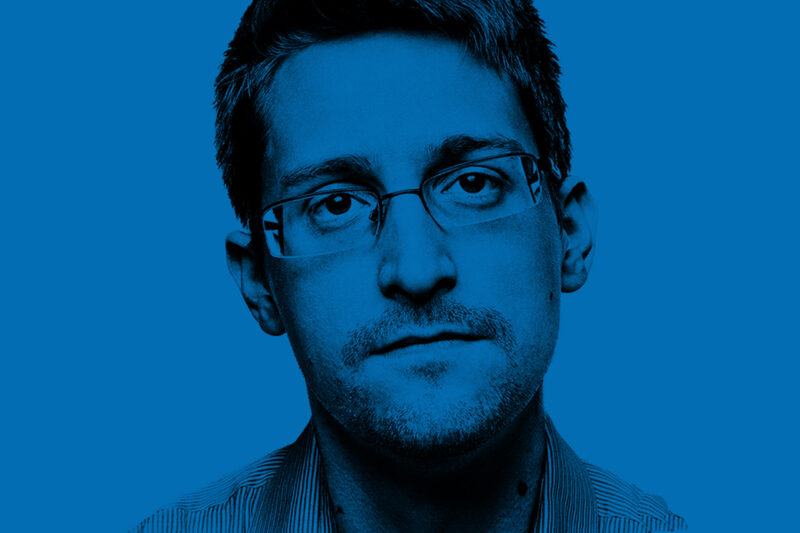 |
| Image from ACLU |
Less than 2 months after the September 11th terrorist attacks on the world trade center the US congress passed The Patriot Act which broadly and vaguely expanded the authority of government agencies, like the NSA, to spy on ordinary citizens for the purpose of counter-terrorism. The extent to which this surveillance was being carried out would be revealed by multiple whistleblowers and news outlets in the years following. One such whistle blower was former intelligence contractor Edward Snowden who in 2013 leaked to The Guardian that the NSA was collecting phone records on a massive scale under section 215 of the patriot act. The fallout from these leaks resulted in huge changes in American surveillance policy, discussion around digital privacy, and the personal life of Snowden himself when it was revealed in June of 2013 that he was the source of the many leaks published by the Guardian and other news outlets.
Now Snowden lives in Russia as a full citizen where he remains safe from extradition to the United States, where he is charged with violation of the 1917 espionage act and theft of government property. Many in the US view Snowden as a brave patriot who put his freedom at risk for the rights of ordinary citizens, others view him as a coward who carelessly put national security in jeopardy. Despite being 10 years ago the debate about what should be done about Edward Snowden remains, should he be pardoned and allowed to return home for bringing the invasive ways that the government spies on us to our attention, or should he be prosecuted for knowingly breaking the law?
Snowden's intelligence work began in 2006 as an IT expert for the CIA where he would remain until 2012 after one of his supervisors had suspected him of trying to open classified files that he was not authorized to access. After leaving the CIA he found work at Dell as a contractor for the NSA with top-secret clearance, it would be in this position that Snowden would obtain some of the information that he would end up sharing with Guardian columnist Glenn Greenwald in 2013. Later in 2013 after his first anonymous leaks to the press he would leave Dell to work at a firm called Booz Allen Hamilton in order to find new information to leak, later that year he would be fired when the Guardian revealed him as the one behind the NSA leaks.
The content of Snowden's leaks were primarily concerned with data mining done by the NSA which is the massive collection of private and public information of individuals in order to generate leads in counter-terrorism investigations. Data mining works by looking at the metadata of digital records which could be seen without opening or looking at the content of the records themselves. Things like timestamps, locations, file sizes, senders and recipients could all be looked at legally without a warrant and then sorted and analyzed by computer programs that could be shared with other government agencies such as the FBI, CIA, or DOD upon request and approval from a secret Foreign Intelligence Surveillance Judge.
One method of data collection, known by its code name PRISM, gave the NSA access to the the servers of tech giants like Microsoft, Google, Apple, and Facebook and allowed the NSA to collect troves of content and metadata belonging to users for the purpose of data mining. This data collection was done with the assistance of these tech companies however when asked directly they were adamant that they had no involvement or knowledge of the program. PRISM was first made known to the public by the Guardian and the Washington Post who obtained a leaked slideshow that had been shared with them by Edward Snowden. Another, much more powerful and invasive system known as XKEYSCORE, also leaked by Snowden, works by intercepting internet traffic as it runs through fiber optic cables. This method allows the NSA to capture any data it seeks to collect in its entirety which essentially anything one user may send to another.
The Snowden NSA leaks shocked many and shaped public discourse around digital privacy. Despite causing a shift in how the public viewed government surveillance the effects of Snowden's leaks on policy were nominal. Many challenges to the most invasive parts of the Patriot act and FISA were already being challenged in the courts before Snowden had leaked anything, ultimately the leaks created a spectacle that emboldened privacy activists and pressured the government to be more transparent with its surveillance methods.
Edward Snowden did nothing wrong. He had the courage to sacrifice his well being because he believed the public was being spied on by the NSA without any meaningful checks on their power. Through hindsight we know that the leaks have caused no damage to national security, so why does he need to be punished in addition to being forced to flee the country? Since Snowden is now a full citizen of Russia it seems that any chance of him being allowed back in the United States without being instantly arrested is slim, but a pardon or commuted sentence for Snowden is not outside the realm of possibility either if we look at previous examples of notable whistleblowers such as Chelsea Manning. While this may sound pessimistic I don't think Edwards situation will change anytime soon, especially as the public discussion of digital privacy shifts from concerns over use by the government to use by tech companies.

(Audible, N.D)
Who is Edward Snowden and What did he do?
Edward Snowden started working for the Central Intelligence Agency in 2006, where he worked as a security technician under diplomatic cover. This position meant he was given top secret clearance. He worked for the CIA until 2009, in which he switched to working as a private contractor that serviced the National Security Agency (NSA). The NSA is responsible for the US government’s communication and security intelligence. While servicing the NSA and having his security clearances, he obtained classified information about the NSA, specifically about U.S surveillance techniques. In May of 2013, Snowden left for Hong Kong on medical leave from his job and talked with The Guardian media reporters about NSA secrets. Snowden releases damning information about how the NSA “improperly collected phone call records of Americans”, with his leaking a series of documents including:
A court order that required Verizon to give meta data to the NSA (like phone numbers, numbers dialed, duration of calls, etc).
A document that disclosed the existence of PRISM, a data mining program that gave the US Intelligence agencies “direct access” to major internet data corporations like Google, Facebook, Microsoft, and Apple. (Ray, 2022).
Claimed the NSA had been hacking Chinese computers since 2009.
He painted this as the reason he decided to work as a contractor for the NSA and wanted to learn about secret NSA activities.
An interesting fact about Snowden’s case is that he willingly came forward in The Guardian and The Washington Post about his identity after publishing the information. He has become one of, if not, the most infamous whistleblower in US history. This begs the question, how should government agencies move forward with contractors in security clearances? This article had a quote from former deputy press secretary Tony Fratto, where he found that “We can name the 20 people or so over the past 10 years who've leaked 'top secret' information," and that "Out of millions. ... The number of people who have divulged 'top secret' information is remarkably small”. (Fratto, 2013).
What privacy concerns and laws are involved in his case?
The fundamental issue that Snowden did was break United States law and endanger national security through his whistleblower status. Not only that, but the reveal to the general public that government surveillance was taking place without knowledge opened up a discussion that still occurs today, about if government and private entities have the right to collect data and use it for tracking/surveillance purposes. Snowden was charged on June 21st of 2013 with two counts of violating the Espionage Act of 1917 and theft of government property. The Espionage Act is a Federal law where it was made illegal to convey information with the intent of interfering with the US armed forces interests and projects or promoting the success of US enemies. The Espionage Act also criminalizes the publication of any information related to National Security without authorization. The theft charges pertain to the documents he released, as it counted as his stealing from the United States Government. He was in Hong Kong at the time of the charges being pressed, leading to questions of if he would need to be extradited by the Hong Kong Government to face trial in the United States.
According to a 2012 report from the office of the director of national intelligence, more than 1.4 million people have “top-secret- security clearance”. This report concluded that more than 483,000 government contractors (like Snowden at the time when he worked for the National Security Agency (NSA)) were given “top secret” security clearances, with 582,000 having “confidential” or “secret clearance”. This paints the question, how many more leaks like this are going to occur with those who have clearance access, but decide to divulge this information?
The question of whether he should be pardoned or not.
Since this incident occurred during the Obama administration, there have been three standing presidents (including Obama) that have all decided to not pardon Snowden. Former President Obama was very firm in his position against Snowden, which can be seen in the video below.
https://youtu.be/wS9TXJqxkSQ
Former President Trump was more open to pardoning Snowden, but Biden remains the same in not addressing/not issuing a pardon for Snowden.
Why he should not be pardoned
https://youtu.be/F06n348V0f8
Even if you believe that Snowden did a good thing in releasing this information, the question of a pardon should be out of the question. I believe that Snowden should not be pardoned because although his actions were noble in releasing information to the American people, his actions clearly violated US federal law and compromised National Security. His past security clearances and record of divulging secret information makes him untrustworthy to come back to the US, as his actions could have put US citizen’s lives at risk by exposing information about US intelligence activities abroad, risking further involvement in our affairs by our enemies like China and Russia. Even if he is not a current threat with him losing his security clearance and never being able to work for the government again, he betrayed an agreement of secrecy he agreed to when working for the NSA and can never be trusted again.
Fratto, the former Deputy Press Secretary I discussed earlier, had a great quote to illustrate this point.
"The 'top secret' clearance is not a hall pass to go around rummaging for information. It absolutely puts a requirement and creates obligations for anybody who is looking at information," Fratto said. "Because of the 'top secret' clearance that they have, it places an obligation on them — a legal obligation — to treat that information responsibly."
Snowden being exiled in Russia also proves as an issue for a pardon, as his involvement with our most notorious enemy and his usefulness to the Russian Government for information (even if he does not disclose anything to them) would be a risk to national security and cannot risk a “double-agent” scenario.
References
Bacon, J. (2019, June 26). NA improperly collected US phone call data after saying problem was fixed. https://www.theguardian.com/us-news/2020/sep/03/edward-snowden-nsa-surveillance-guardian-court-rules
Carafano, J. J. (2020, December 17). Edward Snowden should not get a pardon under any circumstances. https://www.heritage.org/homeland-security/commentary/edward-snowden-should-not-get-pardon-under-any-circumstances
Logiurato, B. (n.d.). How A GED-Holder Managed To Get 'Top Secret' Government Clearance. Retrieved June 10, 2019, from https://www.businessinsider.com/edward-snowden-top-secret-clearance-nsa-whistleblower-2013-6
Reuters. (2020, September 3). NSA surveillance exposed by Snowden was illegal, court rules seven years on. https://www.theguardian.com/us-news/2020/sep/03/edward-snowden-nsa-surveillance-guardian-court-rules
Snowden charged with 3 felonies. (2013, June 21). https://www.politico.com/story/2013/06/edward-snowden-charged-nsa-093179


Edward Snowden is a fascinating case in privacy vs national security. On one hand, he helped usher in discussions around digital privacy via his revealing of top secret information. At the end of the article against Snowden, it mentions a former Deputy press secretary, and how he mentions that this clearance that Snowden was given was not something to be toyed with, and implied that Snowden was treating this as a bit of a game. But, watching the video where he was interviewed, it does give me pause and want to give the counterargument that if Snowden did know the implications of this information, it would make it all the more necessary that he release it. Personally, I think that the concern for privacy outweighs the concern for national security. Not to suggest that this is the case in all cases, but with the ways that the government was overstepping the 4th amendment were concerning enough to require bringing to light. It is vital that government should be adhering to the constitution. that being said, I think that it still is a loaded question of whether Snowden should be pardoned or not. Clearly, he should not be working in government or defense contracting, and it would be worth considering the other areas of where he should get the information out to the public. But I do agree with Snowden's statement in the video about how journalism requires these whistleblowers to help break stories and such that are vital for the public to know. In the end, I think it comes down to the contents of the information itself. If Edward Snowden leaked how Americans are bugged and wiretapped, or how stingrays work, then there might be a bit of a problem, because that information can be used against people. If he leaked the information that the government was storing and taking this information, then I think he would have more of a case to come back. All in all, I do not think that he should be pardoned simply for the sake of there being a precedent set, but I do think his actions were right if he only leaked the necessary information of what the government was doing, and not how they were doing it.
ReplyDeleteThis is an interesting topic. I believe that Snowden should not be pardoned because of the precedent it would set. If Snowden is to be pardoned, that may cause others to be more open to leaking government secrets. This is a serious offense that can really hurt the country, and even though it was for the greater good, I don't believe Snowden should get a pass for this. I am glad that he did what he did and I think it is important for people like Snowden to exist to check the government when it gets too powerful, but Snowden should not be pardoned for his leaks.
ReplyDeleteThis is a cool topic that sprung in something big. While reading, this rebellious act reminded me of Bonnie and Clyde, without the killing of government officials and civilians but their acts against the system. I think that Edward Snowden should not be pardoned because of the same reason Turner explained. Even though I do believe that they did overreact since "the fundamental issue that Snowden did was break United States law and endanger national security through his whistleblower status." I do believe that what Edward did was necessary and how he did it was smart, but I don't believe he should be able to be able to return safely. If he does it would send the wrong message and lead to more people adding to "the 20 people or so over the past 10 years who've leaked 'top secret' information."
ReplyDelete